What does the EU AI Act ask of your team in 2026?
Four dates, and what the Act asks of your team.
Ready for the AI Act?
It lands on your desk. Which parts are yours?

Four dates for a deployer
Deployers use AI at work.
- 2 Feb 2025: bans, AI literacy
- 2 Aug 2026: labels
- 2 Dec 2026: new bans
- 2 Dec 2027: high risk

2 Feb 2025: some bans
Like AI that reads staff's emotions at work. Check none of yours does.
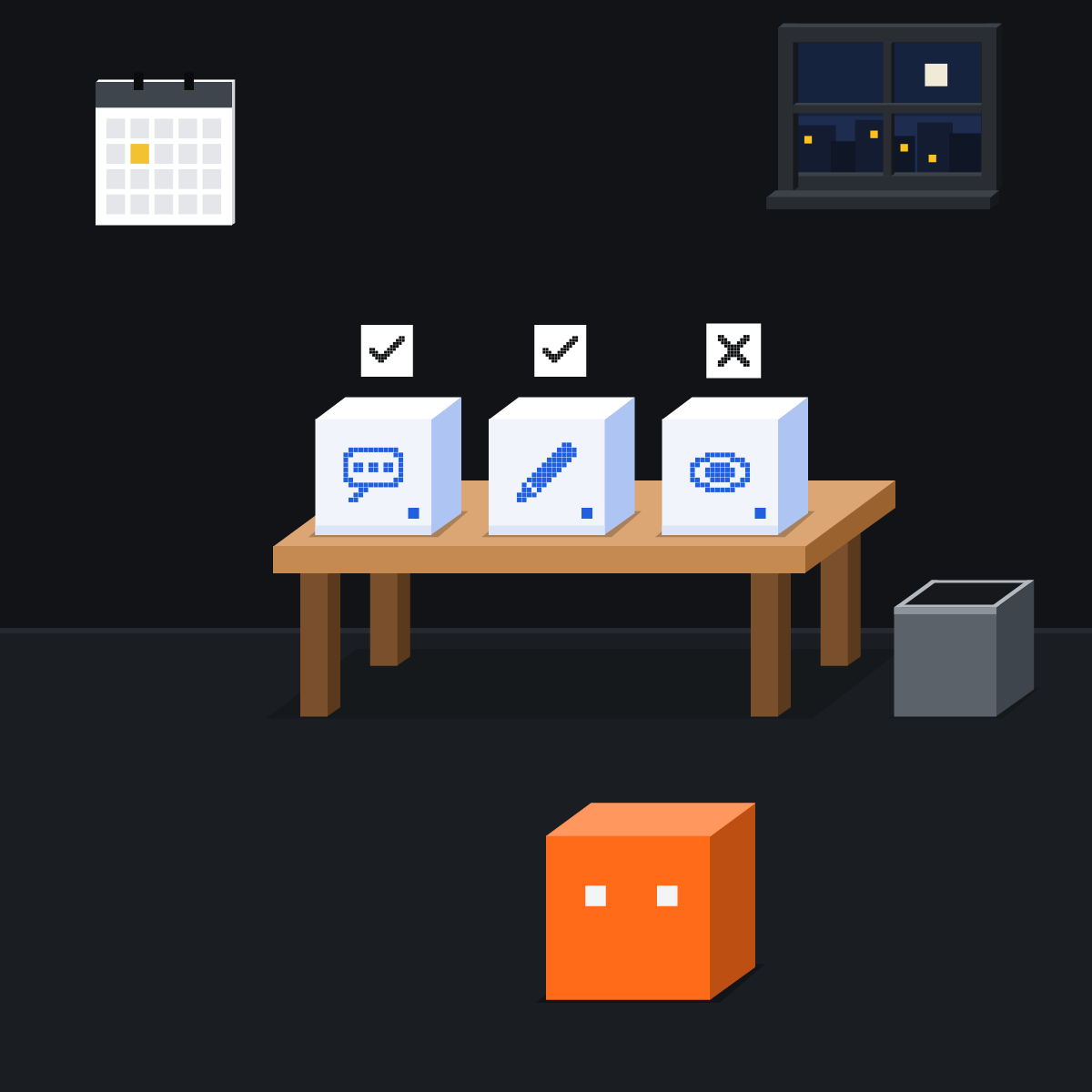
2 Feb 2025: AI literacy
Rewritten July 2026: “take measures to support” staff's AI literacy. No guaranteed level, no certificate.

2 Aug 2026: labels
Made a deep fake? Say it's AI. Public-interest AI text too, unless an editor checked it and answers for it.

2 Dec 2027: high-risk duties
AI to hire, promote, fire or monitor staff is listed high risk. Then: oversight, logs, telling staff.

Start with one list
This quarter: list each AI tool and its use. Flag bans, high risk, labels, training.
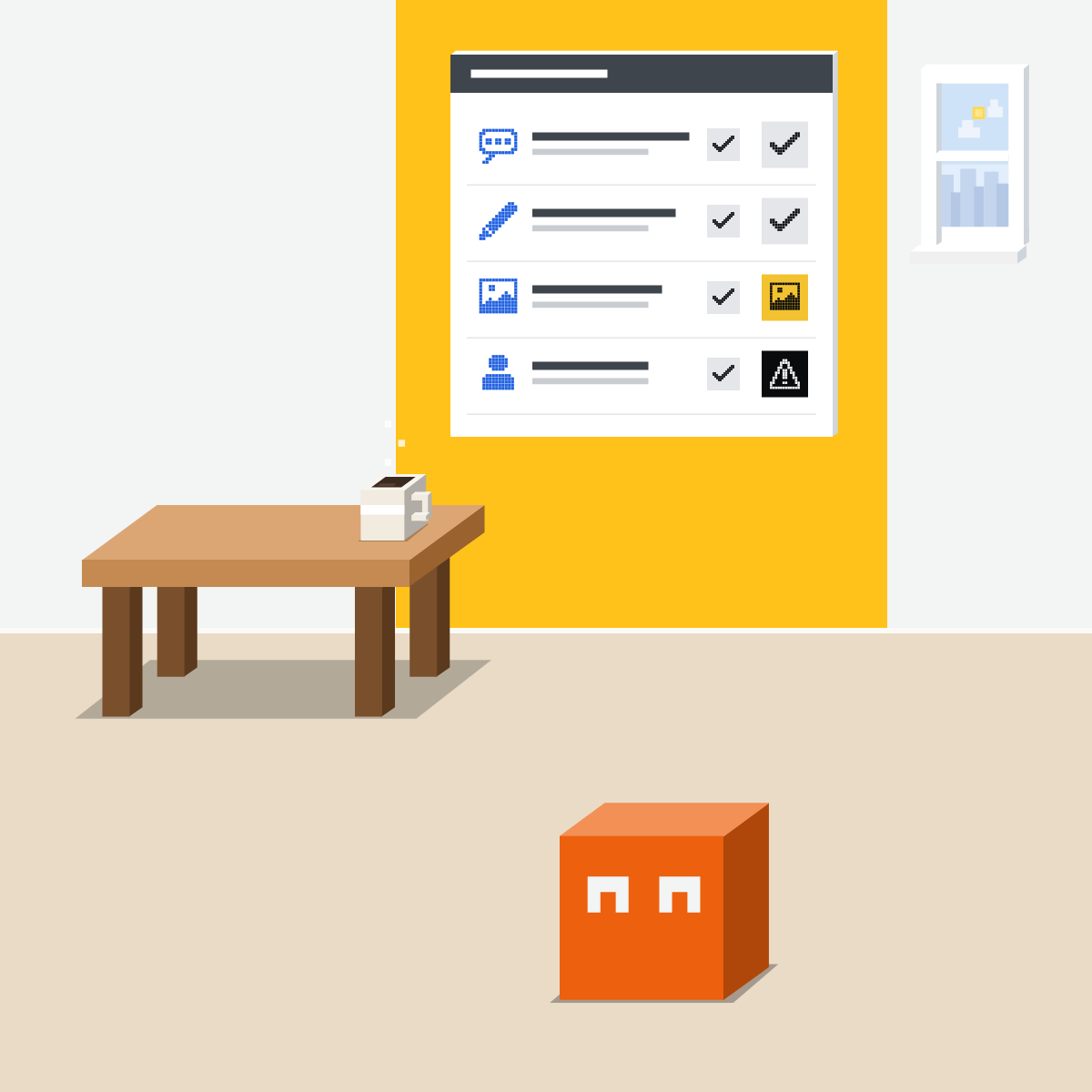
Start your AI list
Tool names only.
- Put your AI tools and uses in the prompt.3 min
- Paste it into Claude, ChatGPT or Gemini.3 min
- Check each flag against the law notes below.4 min
The prompt
Our AI tools and their uses: [your list]
Make a table: tool, use, and three flags.
Could this be a banned use under the EU AI Act?
Is it hiring, promotion, firing or monitoring staff?
Do we publish deep fakes or public-interest AI text with it?
Add a blank column: trained?
Flag, don't decide.
Good looks likeEach flag checked by a person.
In your assistant · as of Oct 2026 · Claude, ChatGPT, GeminiYour tools, listed and marked
Fill your list from the settings. Hidden marks are the maker's job, not your label. Not legal advice.
- CheckWhich tools, for what
- CheckWho's been trained
- CheckWhat needs a label
Build the list from tool names and uses only: no names of staff, candidates or clients.
 Claude
Calls them connectors, and machine-readable marks
Each connector it can reach goes on your list.
Its text carries an invisible watermark. Supported files it makes, such as PNG and JPEG, carry Content Credentials (C2PA).
Models released before 2 Aug 2026 are being added.
Reads a file's Content Credential. Text detection is in private preview.
Anthropic signed the EU code of practice on transparency of AI-generated content.
 ChatGPT
Calls them apps, found in Plugins, and provenance signals
Each app or plugin it can reach goes on your list.
Images carry Content Credentials and SynthID, Google DeepMind's watermark. In the EU, its text carries a textGrain watermark.
Coverage may vary by product and file type.
For images and audio.
OpenAI: these signals don't guarantee content is accurate or unedited.
 Gemini
Calls them connected apps, and SynthID
On a work account, your admin decides what's there.
Google's AI marks its images, video and audio with SynthID, an invisible watermark.
Signed in. For now, its watermark check knows Google's AI only.
Quick check · three questionsDid it stick?
1Your staff use ChatGPT to draft adverts. Does the rewritten Article 4 reach your company?
The answer: A The Commission's AI literacy Q&A answers this very case: yes, staff should be told of risks such as hallucination. It also says no certificate is needed. Not legal advice.2AI that scores call centre staff's performance is listed high risk. From when do the Act's high-risk duties apply to such uses?
The answer: C Monitoring and evaluating staff's performance is on the Annex III list. The July 2026 rewrite moved those duties from 2 Aug 2026 to 2 Dec 2027. A system already in use before then is covered only once its design changes significantly (Article 111(2)). Not legal advice.3It's October 2026. What already applies to a team that uses AI tools?
The answer: B Bans and AI literacy since 2 Feb 2025, Article 50 since 2 Aug 2026. Two more bans come on 2 Dec 2026, and high-risk duties on 2 Dec 2027. Not legal advice.
What starts on 2 Dec 2026Side note
Who enforces Article 4Side note
Deeper on labels and hiringSide note
Law notes, in plain EnglishLaw
Orientation from the official texts on EUR-Lex and the Commission's AI Act pages, read 18 Oct 2026. Not legal advice. A deployer is anyone using an AI system “under its authority”, except in a personal, non-professional activity (Article 3(4)).
- The dates (Article 113, as amended by Regulation (EU) 2026/1744). Chapters I and II, with AI literacy and the bans, from 2 Feb 2025. Most of the rest, Article 50 included, from 2 Aug 2026. Two new bans from 2 Dec 2026. High-risk duties for Annex III uses from 2 Dec 2027. Put them on your list.
- AI literacy (Article 4, as replaced in July 2026). Providers and deployers “shall take measures to support the development of AI literacy of their staff and other persons dealing with the operation and use of AI systems on their behalf”. This “does not require” them “to guarantee any specific level of AI literacy of any individual”. The Commission: “There is no need for a certificate.” Train, and keep a record.
- Banned practices (Article 5, since 2 Feb 2025). Among them: inferring people's emotions in the workplace (except for medical or safety reasons), manipulative or deceptive techniques that cause significant harm, social scoring, and biometric categorisation to deduce race, political opinions, union membership, beliefs, sex life or sexual orientation. Check none of your uses is one.
- Say AI made it (Article 50(4), from 2 Aug 2026). Deployers disclose deep fakes they make with AI, and AI text published to inform the public on matters of public interest, unless it had human review or editorial control and someone holds editorial responsibility. Label it.
- High-risk uses at work (Annex III, point 4, and Articles 26 and 111(2), from 2 Dec 2027). AI for recruiting or selecting people, for decisions on promotion or termination, for giving out tasks by behaviour or traits, or for monitoring and evaluating staff. Deployers then use it as instructed, give oversight to people with the competence, training and authority, keep its logs at least six months where they control them, and tell workers' representatives and the workers affected before using it. A system already on the market or in use before 2 Dec 2027 is covered only once its design changes significantly; systems meant for public authorities must comply by 2 Aug 2030. Ask your adviser.
Whether and how the Act applies depends on where you are and what you do. It covers deployers in the EU, and others whose AI output is used there (Article 2). A team that builds an AI system and offers it under its own name may be a provider, with more duties. Check with your own adviser. Not legal advice.
Sources, checked 19 Oct 2026Source
Law read on EUR-Lex and the European Commission's own AI Act pages on 18 Oct 2026 and again on 19 Oct 2026; product details as of Oct 2026, each checked on the vendor's own page on 19 Oct 2026. Recheck the tools by 19 Nov 2026 and the law by 19 Jan 2027. The examples in the pictures are made up for this lesson.
- European Union, Regulation (EU) 2024/1689, the AI Act, consolidated text of 27 Jul 2026 with the Omnibus changes (Articles 2, 3(3), 3(4), 3(60), 4, 5, 6(2) and (3), 26, 50, 111(2) and (4), 113; Annex III, point 4)
- European Union, Regulation (EU) 2024/1689, the AI Act as first published (Article 113's first dates)
- European Union, Regulation (EU) 2026/1744, the Digital Omnibus on AI, done at Strasbourg on 8 Jul 2026 (the new Article 4; the new bans; Article 111(2) and (4); the new dates in Article 113 and recital 40 on the old 2 Aug 2026 date; in force on the third day after publication)
- European Commission, AI Act (the prohibitions, the newest from December 2026; transparency from August 2026; Annex III from 2 Dec 2027)
- European Commission, AI Omnibus enters into force (27 Jul 2026)
- European Commission, AI Act Service Desk, Timeline for the implementation of the EU AI Act (2 Feb 2025; the majority of rules and enforcement from 2 Aug 2026; 2 Dec 2026; 2 Dec 2027)
- European Commission, AI Literacy: Questions and Answers (staff using ChatGPT for adverts; no certificate; a record of trainings; no duty to measure knowledge; enforcement from 2 Aug 2026 and proportionate sanctions; oversight training for high-risk deployers)
- European Commission, Guidelines on transparency obligations for providers and deployers of certain AI systems (Article 50 applies from 2 Aug 2026)
- European Commission, EU icons for labelling AI-generated content (the icons are optional, the labelling is not)
- Anthropic, How Claude marks AI-generated content (text watermarks; Content Credentials; Claude Content Checker)
- Anthropic, Get started with connectors (Customize, Connectors)
- OpenAI, Provenance signals in OpenAI-generated content (Content Credentials, SynthID, textGrain in the EU, OpenAI: Verify)
- OpenAI, Connected apps in ChatGPT (Settings, Plugins)
- Google, Verify AI-generated images, videos, and audio (SynthID; add the file and ask; signed in; Google AI only for now)
- Google, Use & manage Connected Apps in Gemini (Customize, Connectors)
- Google, Use apps connected to Gemini with a work or school Google Account (the Workspace administrator enables apps)
Free kitThe Team AI Policy KitBring this to your teamTeam workshops · Get in touchBack to level 6, Advanced and by role
Four dates. One list.
Next lesson · 15 minWho is in charge when people and agents work together?