An AI's work passed a check. What did the check actually check?
When AI says its work passed, find out what was checked.
“All checks passed”
Its tick is real. Then you open the report.

Three questions, every time
When it says passed:
- What did it look at?
- Against what?
- What's left is yours
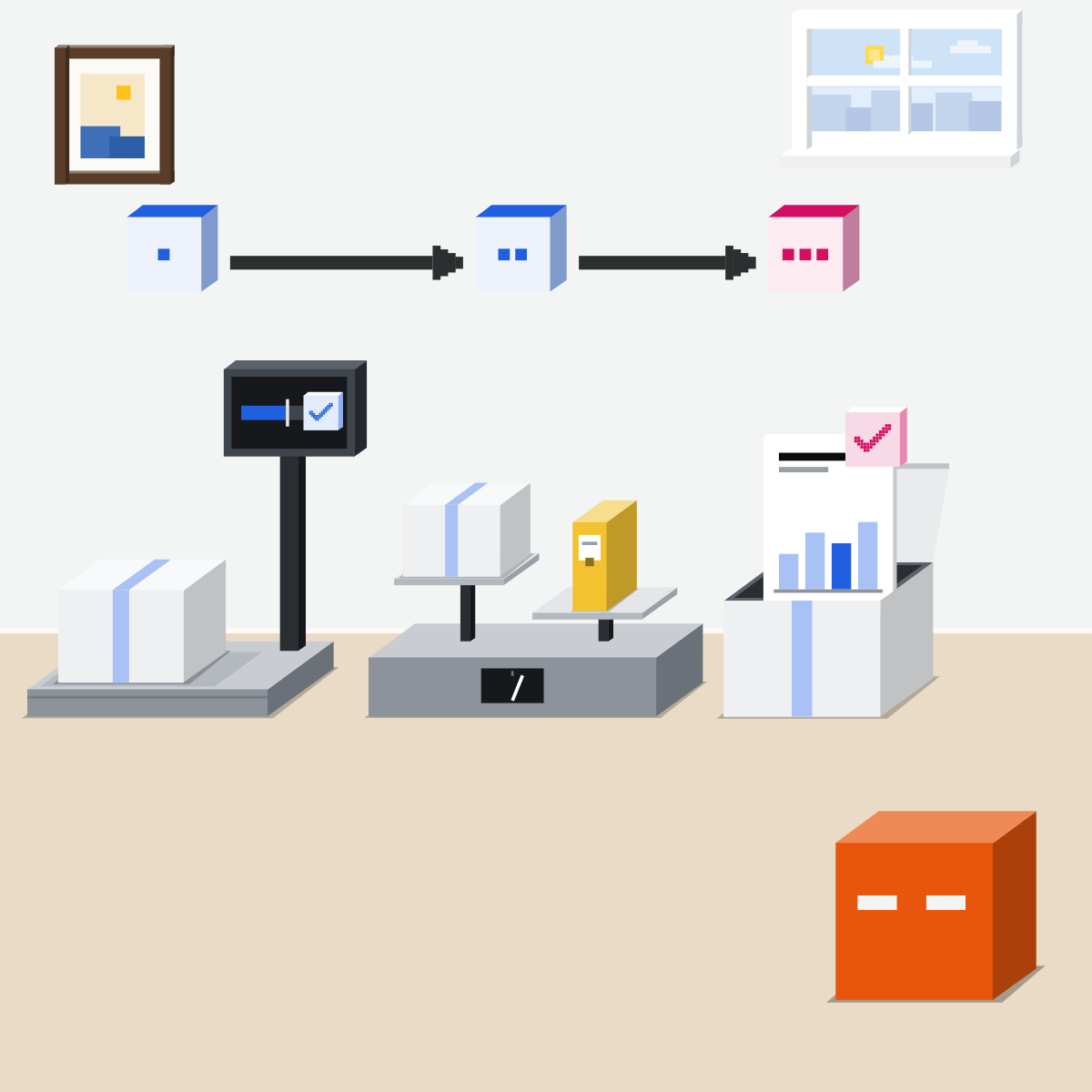
What did it look at?
“Passed” means its own list passed. Here: the file opens, the formulas run.

Against what?
A check against its own work will agree with it. Check against your source.

What's left is yours
Lay its list beside what matters. Check the rest yourself: the numbers, what it says.
My pick for spreadsheets
 Claude for ExcelAlso good:
 Gemini in Google Sheets
Answers point to the cells they came from, formulas stay intact, and it warns before it overwrites anything.
All my picks
It happens in maths too
Sep 2026: OpenAI's maths proof, rewritten as code, passed a computer check. A preprint, not peer reviewed, says the code doesn't match the paper.

Real tick. Small check.
When it says passed, ask what it checked. Then check what matters yourself.

Ask what it checked
Use made-up numbers. Nothing private.
- Ask Claude, ChatGPT or Gemini to total a short made-up sales list and check its work.3 min
- When it says it checked, paste the question below.2 min
- Check one thing it didn't cover.5 min
The question
You said your work passed a check. In plain words:
1. What exactly did the check look at?
2. What did it compare against: my source, or your own work?
3. What did it not check?
4. Which parts should I check myself, and how?
Good looks likeYou know what its check covered, and checked one gap.
In your assistant · as of Oct 2026 · Claude, ChatGPT, GeminiSee what the check did
Ask it to show its method, then look yourself. Menus move often.
- CheckWhat it looked at
- CheckWhat it compared against
- CheckWhat it skipped
Practise on made-up or public numbers. Never paste private data to test it.
Claude
Answers cite the cells they used
Ask it to walk through how a number was derived
In Claude for Excel, on Pro, Max, Team and Enterprise.
Each one goes to the cell it used. Check that cell against your source.
Not for “audit-critical calculations without verification”
Anthropic's own list of what Claude for Excel isn't recommended for.
Anthropic: “Always review changes before finalizing your work.”
 ChatGPT
“Review the generated code, outputs, and assumptions”
Ask it to show its method
OpenAI: when the answer depends on a method, ask ChatGPT to show or adjust it.
The code, the outputs and the assumptions
Before you rely on a result it got by running code.
In ChatGPT Work, add your files and review criteria
So it can check against your source, not only its own work.
Gemini
Shows its analysis steps and code
Top right in Google Sheets.
How it got the result.
The code used to make the output.
Needs an eligible Google Workspace or Google AI plan.
Quick check · three questionsDid it stick?
1An agent built your sales sheet, then wrote its own tests. “All tests pass.” What does that tell you?
The answer: B Tests written from its own work check the sheet against itself. The pass is real, but your sales system wasn't in it.2It says the report “opens, and every formula runs”. What is still yours to check?
The answer: A That check looked at the file and the formulas. Whether the figures are right is a different question.3Your agent's email to a customer “passed the tone check”. Before it goes out, you read it for:
The answer: C A tone check looks at how it sounds. What it says and promises was never part of it.
The maths caseSide note
Its answer helps you aimSide note
A separate release: 719 papersSide note
Sources, checked 19 Oct 2026Source
Product details as of Oct 2026, checked on the vendors' own pages on 18 and 19 Oct 2026. Recheck by 19 Nov 2026. The examples in the pictures are made up for this lesson, except picture 6, a diagram of the real 2026 case.
- Anthropic, Use Claude for Excel (Pro, Max, Team and Enterprise; ask it to walk through how a number was derived; cell-level citations you can click; not recommended for audit-critical calculations without verification; always review changes)
- OpenAI, Data analysis with ChatGPT (for some data-analysis tasks it writes and runs Python code; review the generated code, outputs and assumptions; ask it to show or adjust the method)
- OpenAI, ChatGPT Work and Codex (add any files, constraints and review criteria; review the result; Codex can run tests and commands)
- Google, Collaborate with Gemini in Google Sheets (Ask Gemini at the top right; Analysis steps; Show code; needs an eligible Google Workspace or Google AI plan)
- OpenAI, its Navier-Stokes proof post (the announcement and paper of 8 Sep 2026; a writeup of the proof and a formalization in Lean; Lean verification complete on 6 Sep 2026; no mention of the preprint on 19 Oct 2026)
- OpenAI on GitHub, NavierStokesAndEuler (the Lean code, last changed 10 Sep 2026, the version the preprint examined)
- arXiv, Navier-Stokes lost in translation, preprint 2610.08144 by Bastounis, Circelli and Hansen (v1 of 6 Oct 2026, still the only version on 19 Oct 2026, no journal reference; the formal proof does not correspond to the written one)
- arXiv, the same preprint in full, v1 (only two examples shown, not the only ones; a different Lean proof of a weaker statement; the authors' disclaimer on the written proof)
- OpenAI on GitHub, openai/math (719 manuscripts produced by an internal OpenAI model; "~42% top-line results formalized")
- OpenAI on GitHub, openai/math history (300 / 719 = ~42%, the entry of 7 Oct 2026)
- OpenAI on GitHub, the openai/math formalization catalogue (papers with a formalized main result; made by an agent)
Free kitThe AI Fact-Check KitBring this to your teamTeam workshops · Get in touchBack to level 4, Agents
Ask what passed. Check what matters.
Next lesson · 14 minHow can a web page hijack your AI?