Who taught it all this?
Where AI's knowledge comes from, and why you hand it the document.
Right topic, wrong policy
You asked about your policy. It answered about policies in general.
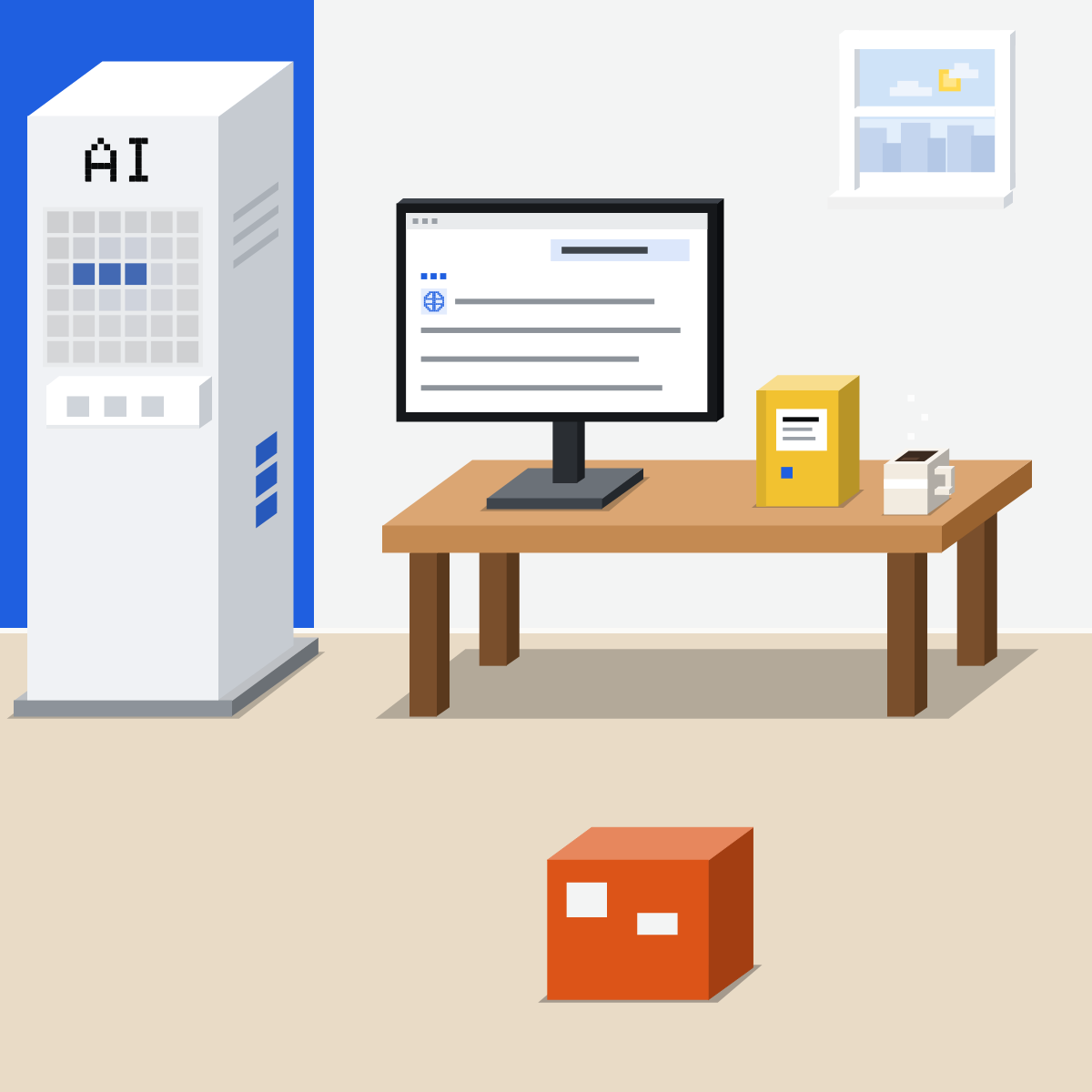
How it got this way
In four steps.
- Read, guessing next words
- Trained to help
- Reading stopped at a date
- It doesn't know your files
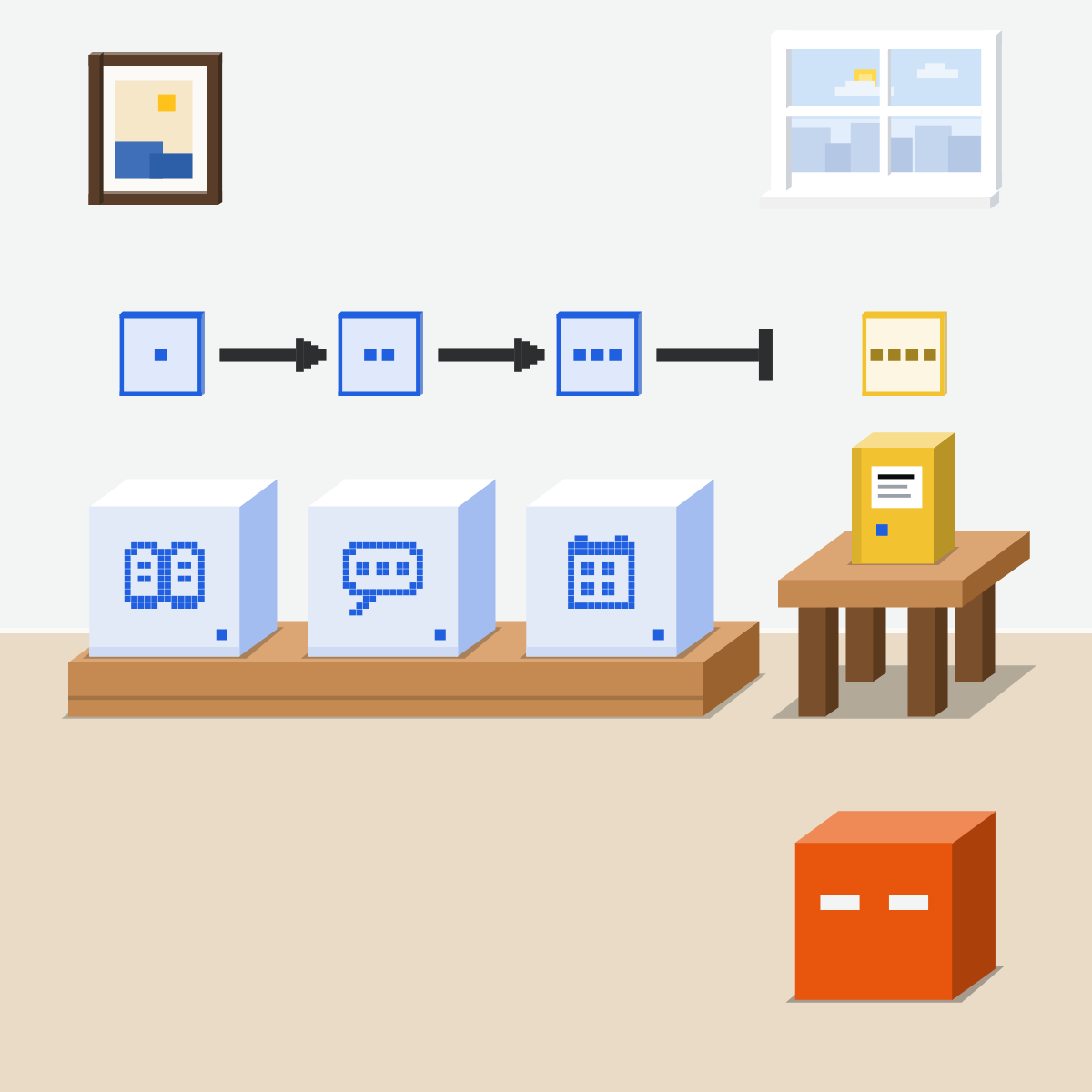
It read, guessing next words
It read huge amounts of text, guessing each next word. Misses nudged it slightly.
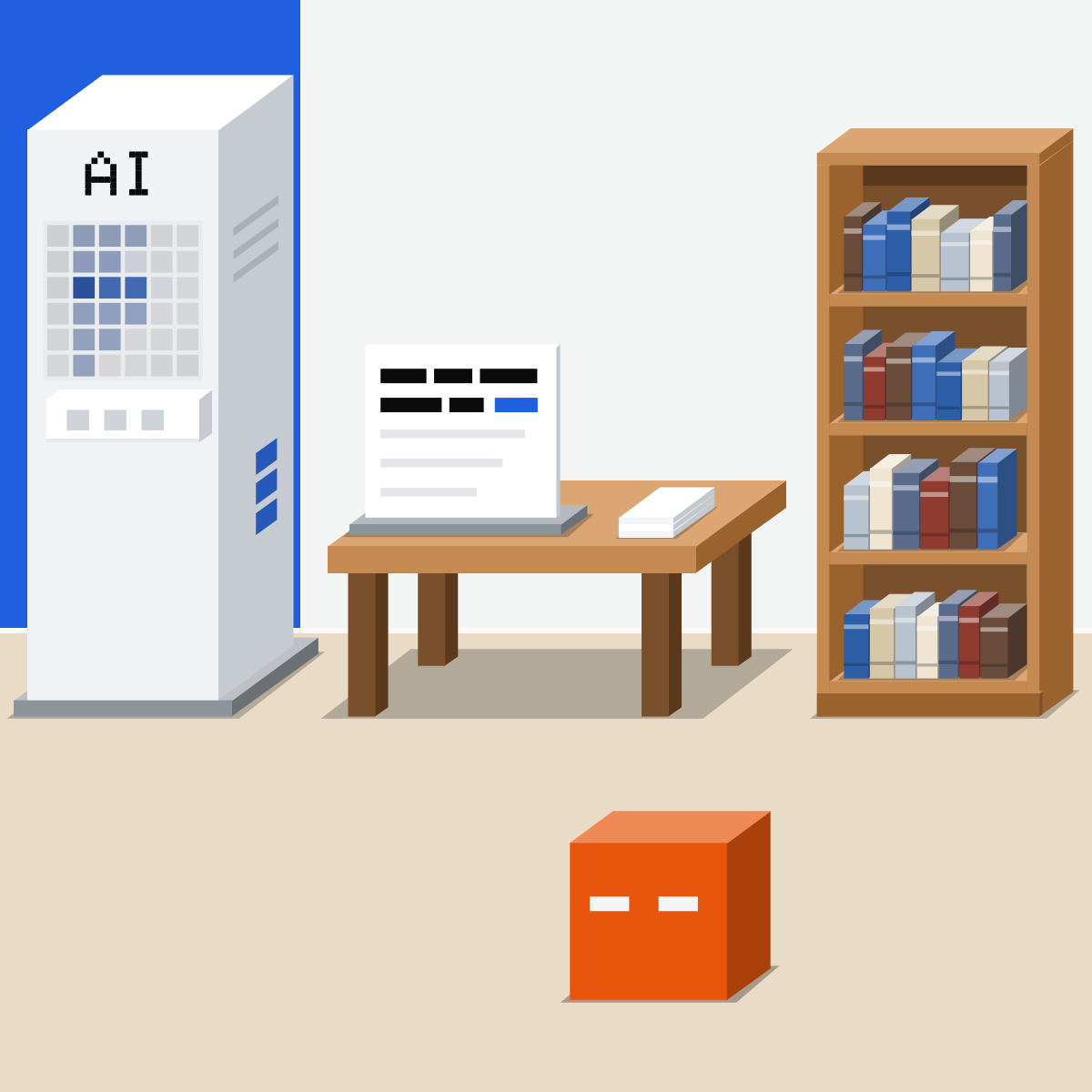
Then trained to help
Reading alone didn't make it helpful. Example answers and people's rankings did.
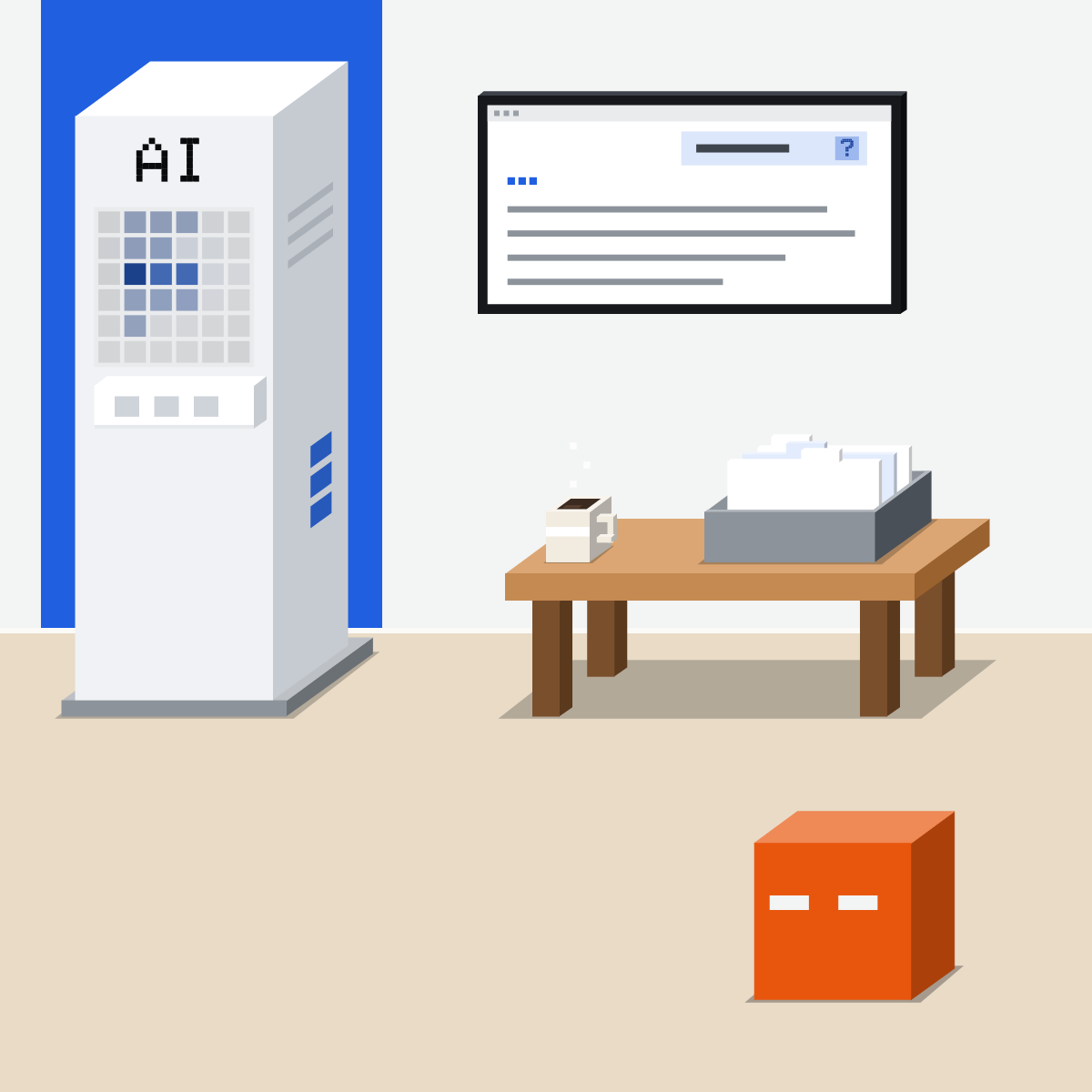
Its reading stopped at a date
That's its knowledge cutoff. Anything newer needs a search, or you.
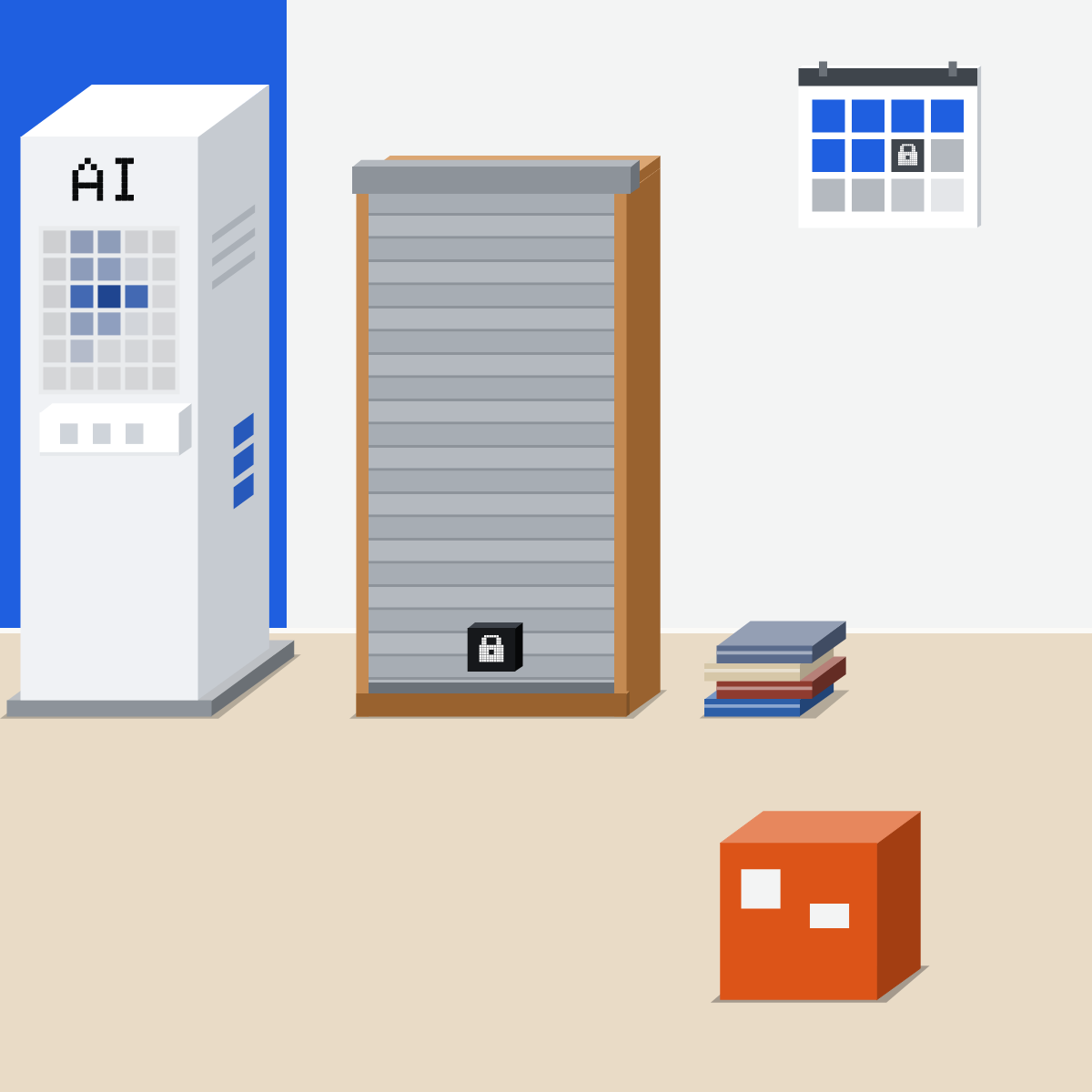
Your report isn't on its shelves
It read public text and other data. It knows reports, not yours.
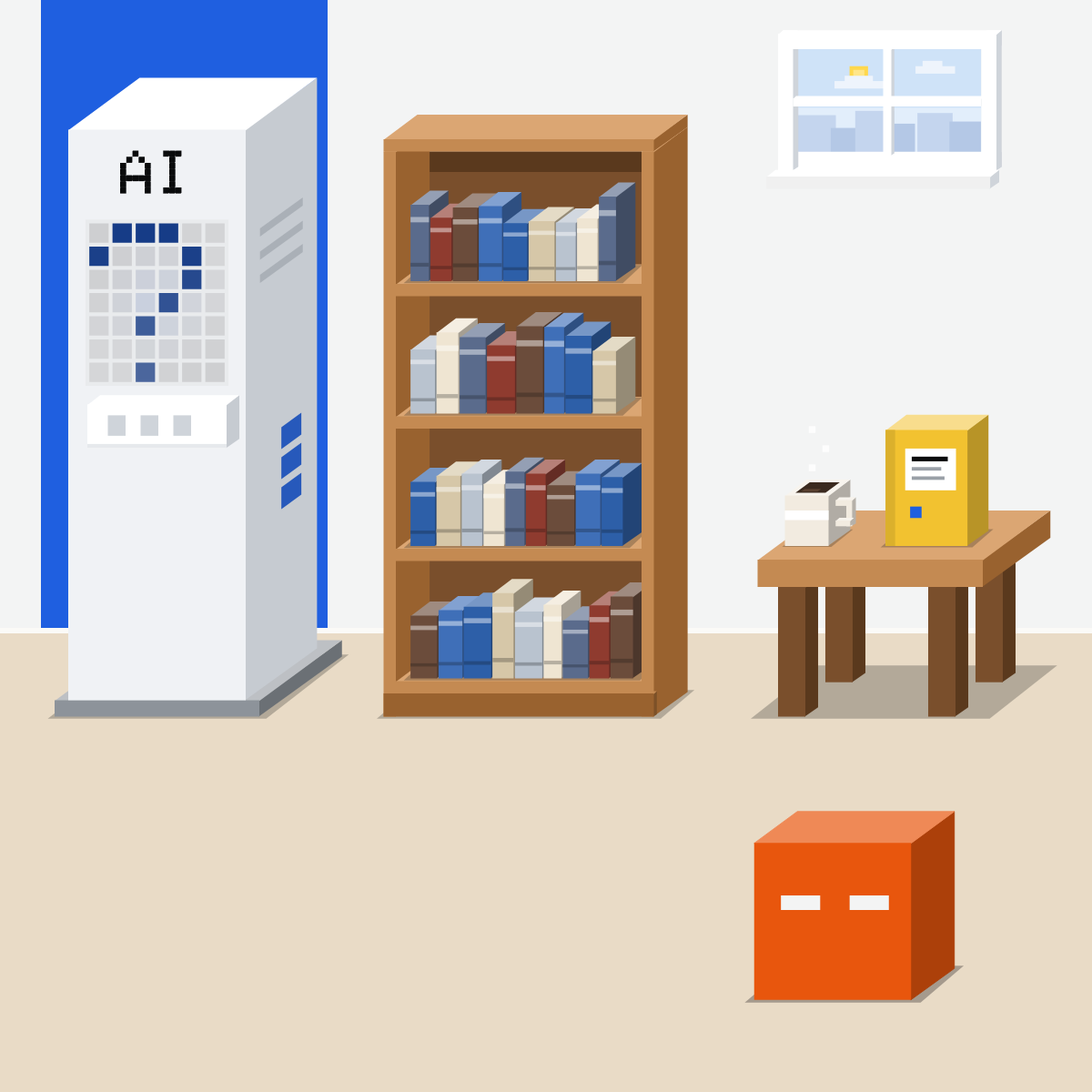
Learned the world. Hand it yours.
Paste or attach it. With the real text in front of it, the likely answer is usually true.
My pick for your own files
 Gemini NotebookAlso good:
 Claude Projects
Built for answers drawn only from the files you add. It was called NotebookLM until July.
All my picks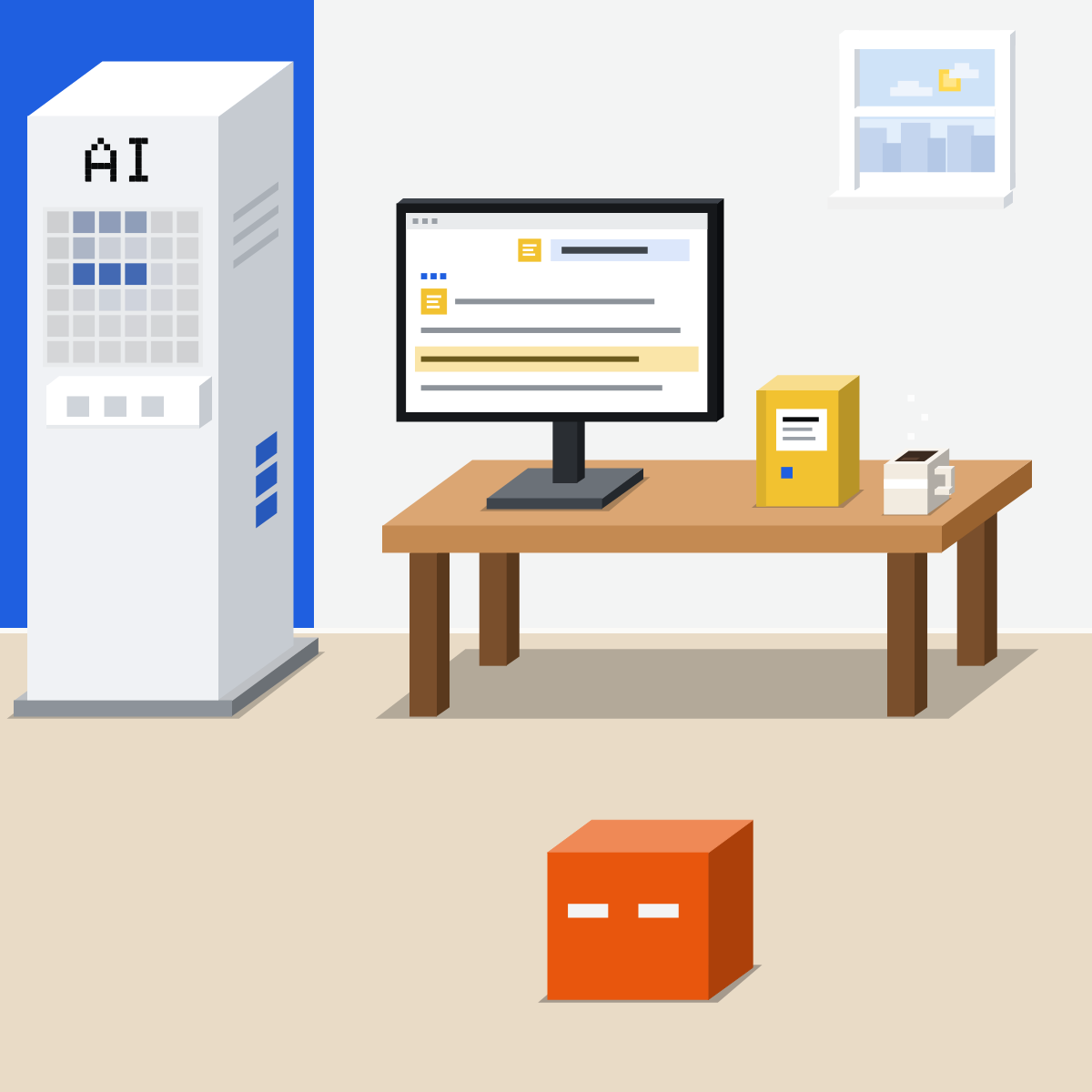
Without it, then with it
A made-up policy, safe to paste.
- New chat: ask only the question.3 min
- New chat: paste all of it.3 min
- Compare the two answers.4 min
The made-up policy
Our team's travel policy (made up):
1. First class only on trains over 2 hours.
2. Hotel stays over 3 nights need a manager's sign-off.
3. Book through the travel desk.

Question: Can I book first class on a 90-minute train? Answer only from the policy above, and quote the line you used.
Good looks likeOnly the second answer quotes rule 1.
In your assistant · as of Oct 2026 · Claude, ChatGPT, GeminiHand it over, and know its date
Menus move often. For work documents, use the tool your company approves.
- CheckYour company allows it
- CheckThe newest version
- CheckIts knowledge cutoff
Check your workplace's rules before you paste a confidential document into any AI tool.
Claude
Attach it, or keep it in a project
Up to 20 files a chat. Or paste the text.
Add files to the project's knowledge, for documents you reuse. Free: up to five projects.
Knowledge cutoff: June 2026
For Opus 5.5, Sonnet 5.5 and Haiku 5.5. Anthropic's help centre lists other models' dates.
 ChatGPT
Attach it, or add it to a project
Attach the file, or paste the text
Pastes over 10,000 characters become an attachment. Free: 3 uploads a day.
Then add its files: 5 on Free, 25 on Go and Plus, 40 on Pro and up.
Knowledge cutoff: 20 Apr 2026
For GPT-6 Sol, behind GPT-6 in Chat on Plus and up, on OpenAI's developer page for that model. Free and Go use a Luna model with its own date.
Gemini
Attach it, or use a notebook
Or Add from Drive. Up to 10 files a prompt, subject to availability.
Upload your sources, then ask about them.
Knowledge cutoff: March 2026
For Gemini 4 Argon and Gemini 3.6 Flash, in Google DeepMind's model cards. Some areas are older.
Quick check · three questionsDid it stick?
1A teammate asks AI about a rule your company changed last month. No file, no search. What is the answer built on?
The answer: A Your rule wasn't in its reading, and its reading stopped at a date. With nothing handed over, it writes what's likely.2Why does pasting in the real contract usually give a better answer about it?
The answer: B The pasted text is its working memory for that chat, not new training. With the real text in front of it, the likely answer is usually true.3Its answers come out polite, organised and on topic. Where does that mostly come from?
The answer: C Reading alone didn't make it a good assistant. Example answers and people's rankings did. OpenAI says its models keep no copies of their training data.
Pasting isn't trainingSide note
Search helps with news, not your filesSide note
Still check what mattersSide note
Sources, checked 19 Oct 2026Source
Product details as of Oct 2026, each checked on the vendor's own page on 19 Oct 2026. Recheck by 19 Nov 2026. The examples in the pictures are made up for this lesson.
- Anthropic, Glossary (pretrained to predict the next word; pretrained models not inherently good at answering questions; fine-tuned to be a helpful assistant; RLHF ranks example texts; the context window is a working memory, apart from the training data)
- Anthropic, How up-to-date is Claude's training data? (knowledge cutoff June 2026 for Haiku 5.5, Sonnet 5.5, Opus 5.5 and Fable 5.1, with older models' dates; models may not be aware of events after their cutoff)
- Anthropic, Models overview (reliable knowledge cutoff and training data cutoff Jun 2026 for the four current models)
- Anthropic, Transparency Hub (training data: publicly available information, public and private datasets, user data, synthetic data, and for Sonnet 5.5 data users explicitly permitted for training; pretrained, then post-training to be an effective assistant)
- Anthropic, Tracing the thoughts of a large language model (27 Mar 2025; models like Claude are not programmed directly by humans but trained on large amounts of data)
- Anthropic, Reduce hallucinations (word-for-word quotes from the document; allow "I don't know"; the techniques "don't eliminate them entirely")
- Anthropic, Upload files to Claude (+, then Add files or photos; up to 20 files a chat)
- Anthropic, How can I create and manage projects? (Projects, + New Project, + to add files to project knowledge)
- Anthropic, What are projects (Free users can create up to five projects)
- Anthropic, Use the connectors directory (Claude inherits each person's permissions from the connected service)
- Anthropic, Claude release notes (Fable 5.1, Opus 5.5, Sonnet 5.5 and Haiku 5.5 launched Sep to Oct 2026; no change to uploads or projects since)
- OpenAI, How ChatGPT and our foundation models are developed (predict the next most likely word; parameters adjusted slightly; pre-training and post-training; no stored copies of training data; training data from the public internet, third-party partners, users, trainers and researchers, and synthetic data)
- OpenAI, Does ChatGPT tell the truth? ("Knowledge cutoff: The models are trained on data up to a certain point"; without search, responses are based on what the model learned in training)
- OpenAI, GPT-6 Sol model page, OpenAI's developer site (Apr 20, 2026 knowledge cutoff)
- OpenAI, GPT-6 Luna model page, OpenAI's developer site (May 18, 2026 knowledge cutoff)
- OpenAI, GPT-5.6 Luna model page, OpenAI's developer site (Feb 16, 2026 knowledge cutoff)
- OpenAI, GPT-6 and other models in ChatGPT (with GPT-6 selected, GPT-6 Sol powers Instant to Extra High; Free and Go receive GPT-5.6 Luna)
- OpenAI, ChatGPT release notes (4 Aug 2026: pastes over 10k characters become an attachment, on all plans; 7 Oct 2026: Plus, Pro, Business and Enterprise use GPT-6 Sol, Free and Go use GPT-6 Luna)
- OpenAI, Uploading files and audio to ChatGPT (Free users are limited to 3 file uploads per day)
- OpenAI, Projects in ChatGPT (New project in the sidebar; files per project: 5 Free, 25 Go and Plus, 40 Edu, Pro, Business and Enterprise)
- Google, Learn about generative AI (machine learning models, generative AI included, learn through training, by observation and pattern matching; LLMs pick probable next words)
- Google DeepMind, Gemini 4 Argon model card (13 Oct 2026; knowledge cutoff March 2026, less up to date in some domains; training data includes publicly available web documents, licensed data, user data under Google's terms and user controls, and synthetic data; post-training with instruction tuning, reinforcement learning and human-preference data)
- Google DeepMind, Gemini 3.6 Flash model card (21 Jul 2026; knowledge cutoff March 2026; some domains limited to January 2025)
- Google, Gemini Apps release notes (13 Oct 2026: Gemini 4 Argon; no change to uploads or notebooks since)
- Google, Upload & analyze files in Gemini Apps (Add files, then Upload or Add from Drive; up to 10 files a prompt, subject to availability)
- Google, Create a notebook in Gemini Notebook (Create new notebook; Upload a source; ask questions about your sources)
Free skillCheck a draft against its sourcesBring this to your teamTeam workshops · Get in touchBack to level 1, Start here
Paste in the real document.
Next lesson · 15 minHow do you brief AI so the first answer is close?